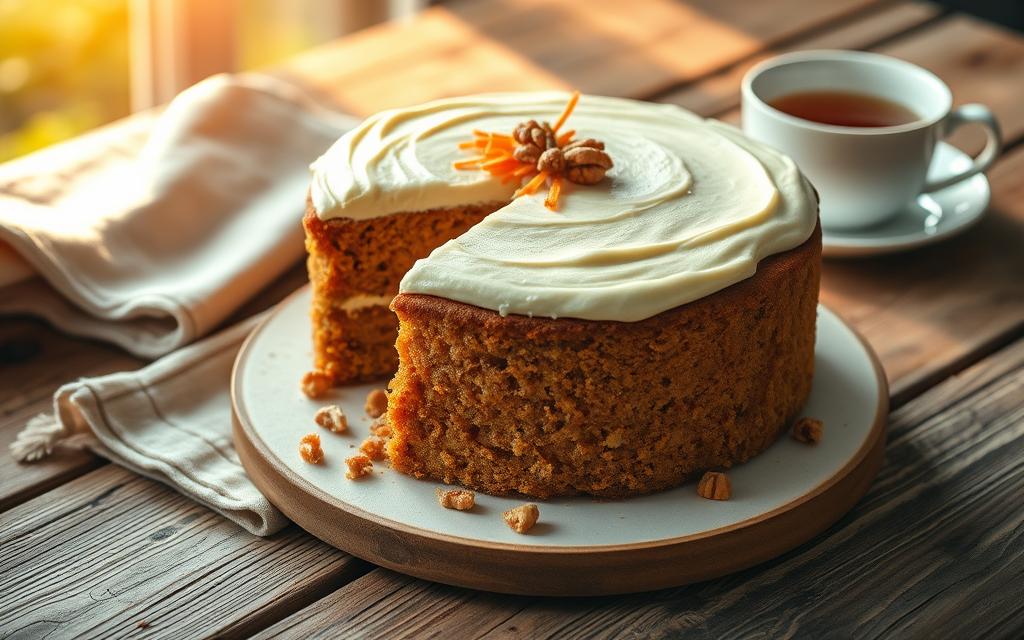
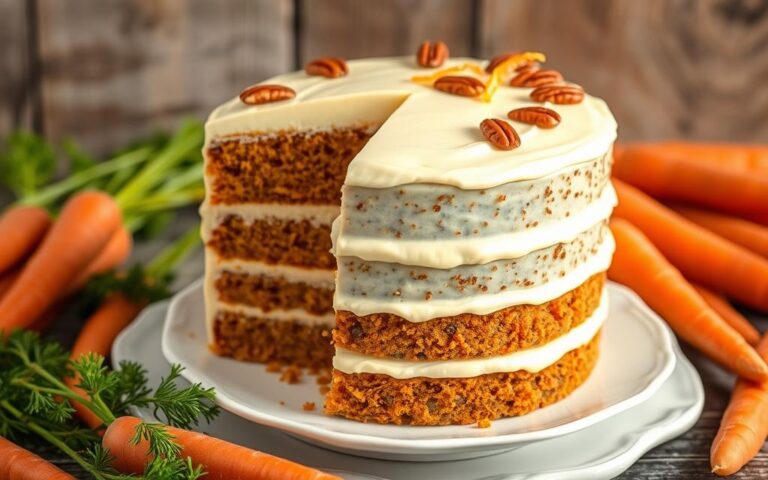
Indulge in the moist and flavorful world of carrot cake, a dessert that has captured the hearts of many. This delicious recipe is not only easy to follow but also yields a wonderfully moist cake with a creamy frosting.
Our comprehensive guide covers everything from selecting the finest ingredients to decorating the finished cake. You’ll learn professional techniques for creating a moist and flavorful dessert that will impress your friends and family. With a perfect balance of spices and a creamy frosting, this carrot cake recipe is sure to become a favorite.
For another cake option, carrot cake is worth trying.
By following this step-by-step guide, even beginners can achieve bakery-quality results at home. We’ve tested this recipe multiple times to ensure reliability and consistent results, making it perfect for anyone looking to create a delicious cake.
The allure of carrot cake lies in its perfect blend of spices and sweetness, making it a beloved dessert worldwide. This delightful treat has a rich history and has evolved over time to become a staple in many cultures.
History and Popularity of Carrot Cake
Carrot cake has its roots in medieval Europe, where it was consumed as a sweet bread. Over time, it has evolved into a moist and flavorful dessert, enjoyed globally. As noted by culinary experts, “carrot cake has become a classic dessert due to its unique blend of spices and the natural sweetness of carrots.” For more insights on selecting the perfect carrot cake, you can visit tips for purchasing the perfect carrot.
This cake recipe promises to deliver an exceptionally moist and flavorful carrot cake, thanks to the combination of freshly grated carrots, oil, and proper mixing techniques. The flavor profile is enhanced by the perfect balance of spices, including cinnamon and nutmeg, creating a warm and inviting taste experience. Our readers have praised this recipe, saying it’s “the best they’ve made” and “absolutely perfect.” With loads of freshly grated carrots, depth from vanilla and brown sugar, and velvety cream cheese frosting, this subtly spiced cake is sure to be a hit.
The contrast between the spiced cake and tangy cream cheese frosting creates a perfect flavor harmony, making this dessert a classic. By following this recipe, you’ll achieve a tender and moist cake without it being heavy or dense. The key to success lies in using properly grated carrots, which are essential for achieving the best texture and moisture in your carrot cake.
Essential Ingredients for a Moist Carrot Cake
To make a truly exceptional carrot cake, you need to start with the right ingredients. The quality and combination of these ingredients are crucial for achieving the perfect balance of moisture and flavor.
Dry Ingredients
The dry ingredients provide the structure and foundation for the cake. All-purpose flour is the preferred choice, but you can substitute it with spelt flour or a gluten-free flour blend if needed. The recipe also includes baking soda, which helps the cake rise without making it too fluffy or dense.
All-purpose flour provides the perfect structure for carrot cake.
Baking soda helps the cake rise.
Wet Ingredients
The wet ingredients are where the magic happens, adding moisture and richness to the cake. Vegetable oil is used instead of butter to keep the cake moist for days. The recipe also calls for a combination of granulated sugar and brown sugar, which adds moisture and a deeper caramel flavor. Vanilla extract enhances the natural sweetness of the carrots, while eggs provide structure and richness.
Vegetable oil keeps the cake moist.
A mix of granulated and brown sugar adds moisture and flavor.
The Star of the Show: Carrots
Three cups of freshly grated carrots are essential for making this the best carrot cake. Freshly grated carrots are a must, as pre-shredded carrots are too dry and thick. The carrots add moisture and flavor, making the cake truly special.
Three cups of freshly grated carrots are a must.
Fresh carrots add moisture and flavor.
By combining these ingredients in the right proportions, you’ll end up with a moist and delicious carrot cake that’s sure to impress.
Equipment You’ll Need
To make a delicious carrot cake, you’ll need to prepare the necessary baking equipment. The right tools will ensure that your cake turns out moist and flavorful.
Baking Tools
For baking a carrot cake, you’ll need two 9-inch round cake pans. Lightly grease them with baking spray or butter and line the bottoms with parchment paper to ensure easy removal. Alternatively, you can use an 8-inch pan, but you’ll need to adjust the baking time. A 9 x 13-inch rectangular pan is also suitable for a single-layer cake. If you prefer a bundt cake, a 10-cup or 12-cup bundt pan will work, but expect a longer baking time.
Mixing Equipment
For mixing, you’ll need two mixing bowls: one for dry ingredients and one for wet ingredients. A rubber spatula is essential for gently folding the ingredients together without overmixing. Measuring cups and spoons are also crucial for accurate ingredient proportions. Additionally, a box grater or food processor with a grating attachment is necessary for shredding carrots to the right consistency. An offset spatula will help with frosting the cake, creating a smooth finish.
How to Make Carrot Cake: Step-by-Step Instructions
With just a few bowls and a mixing spoon, you can make a moist and flavorful carrot cake. The process involves preparing your ingredients, mixing the batter, baking the cake, and cooling it properly.
Preparing Your Ingredients
Begin by preheating your oven to 350°F (175°C) and preparing your cake pans with grease and parchment paper. Wash, peel, and finely grate your carrots using a box grater or food processor. This fresh preparation is crucial for moisture.
In a large bowl, whisk together all dry ingredients (flour, baking soda, salt, cinnamon, and nutmeg) until well combined.
Mixing the Batter
In a separate bowl, mix the wet ingredients (oil, sugars, eggs, and vanilla) until smooth and fully incorporated. Gently fold the dry ingredients into the wet mixture, being careful not to overmix as this can make the cake tough. Add the grated carrots and any optional ingredients (nuts, raisins) and fold just until evenly distributed.
Baking the Cake
Divide the batter evenly between prepared pans and smooth the tops with a spatula. Bake for 30-35 minutes or until a toothpick inserted in the center comes out clean with a few moist crumbs.
Cooling Process
Allow the cake layers to cool in their pans for 15 minutes before transferring to a wire rack to cool completely. Ensure the cakes are completely cooled before frosting to prevent the cream cheese frosting from melting.
Step
Description
Time
Preheating
Preheat oven to 350°F
10 minutes
Baking
Bake cake layers
30-35 minutes
Cooling
Cool cake layers
15 minutes in pan, then on rack
Creating the Perfect Cream Cheese Frosting
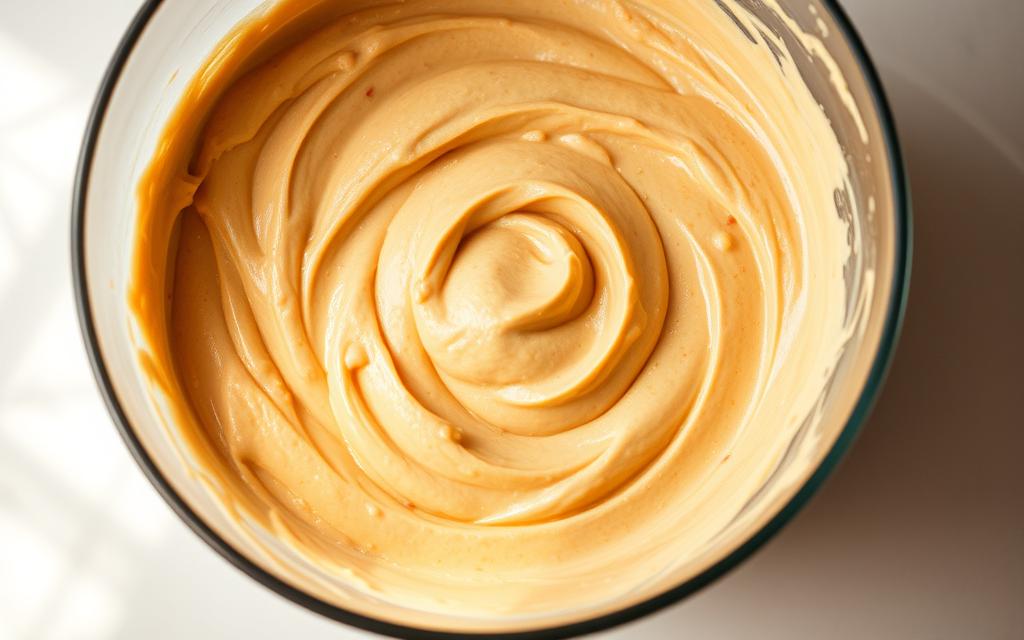
The crown jewel of any carrot cake is undoubtedly its cream cheese frosting. A well-made frosting can elevate the entire dessert, balancing the spices and sweetness of the cake with its tangy creaminess.
Ingredients for Cream Cheese Frosting
To make the perfect cream cheese frosting, you’ll need a few key ingredients. Start with full-fat block cream cheese at room temperature for the smoothest texture. Softened unsalted butter adds richness and helps stabilize the frosting. Sifted powdered sugar is essential to remove lumps and achieve a perfectly smooth texture. A small amount of vanilla extract enhances the flavor without overpowering the cream cheese.
Mixing the Frosting
Begin by beating the cream cheese and butter together until smooth. Gradually add the sifted powdered sugar, beating until fully incorporated. Add a pinch of salt and vanilla extract to taste. For a lighter frosting, incorporate heavy cream with at least 35% fat content. Beat the mixture until it reaches your desired consistency.
Achieving the Right Consistency
The ideal consistency for cream cheese frosting is spreadable but firm enough to hold its shape on the cake. If your frosting becomes too soft, refrigerate it for 15-20 minutes before continuing. For a firmer frosting, add more powdered sugar; for a lighter frosting, add a bit more heavy cream. The key is to achieve a balance between tanginess and sweetness.
Ingredient
Quantity
Purpose
Cream Cheese
16 ounces
Provides tanginess and richness
Unsalted Butter
1/2 cup
Adds richness and stability
Powdered Sugar
4½ cups
Sweetens and thickens the frosting
Vanilla Extract
1¼ teaspoons
Enhances flavor
Heavy Cream
As needed
Adjusts consistency
Assembling and Decorating Your Carrot Cake
With your cake layers baked and your cream cheese frosting prepared, it’s time to bring everything together. Assembling your carrot cake involves layering the cake, applying the frosting, and adding decorative touches.
Layering the Cake
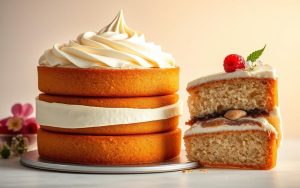
To start, place one cake layer top-side up on a cake stand or serving platter. Use a small dollop of frosting underneath to secure it. Then, spread approximately ¾ cup of cream cheese frosting over the top to the edge of the cake. Position the second cake layer upside-down on top of the frosting to create a flat top surface.
Frosting Techniques
Apply a thin “crumb coat” of frosting over the entire cake and chill for 15-20 minutes to set. Then, use an offset spatula to apply the final layer of cream cheese frosting smoothly around the sides and top of the cake. For more information on decorating techniques, you can visit this page for inspiration.
Creative Decoration Ideas
Get creative with your cake’s design by using piped frosting to create swirls or flowers. You can also press chopped nuts into the sides of the cake for added texture and visual appeal. For a professional touch, consider decorating with small piped carrots using orange and green tinted frosting.
Decoration Idea
Description
Piped Frosting Swirls
Create decorative swirls on top using the back of a spoon or with piped frosting designs.
Chopped Nuts
Press chopped nuts (pecans or walnuts) into the sides of the cake for texture and visual appeal.
Piped Carrots
Use orange and green tinted frosting to create small piped carrots for a professional touch.
Troubleshooting Common Carrot Cake Problems
Common problems can occur when making carrot cake, but they can be easily fixed. Whether you’re dealing with a dry cake, runny frosting, or sinking layers, understanding the causes and solutions can help you achieve a perfect dessert.
Preventing a Dry Cake
A dry cake is often the result of overbaking or incorrect flour measurement. To avoid this, use the spoon and level method for measuring dry ingredients, and check your cake frequently towards the end of the baking time. If your cake does turn out dry, you can salvage it by brushing the layers with simple syrup before frosting.
Fixing Runny Frosting
Runny frosting typically results from using cream cheese or butter that’s too warm, or using spreadable cream cheese instead of block cream cheese. To fix this, refrigerate the frosting for 30-60 minutes until it firms up to a spreadable consistency. For more tips on making the perfect cream cheese frosting, check out this guide on carrot cake common mistakes.
Dealing with Sinking Layers
Sinking cake layers can be caused by overmixing the batter, overfilling the cake pans, or using expired baking soda. Ensure your baking soda is fresh (less than 6 months old) and mix the batter just until the ingredients are combined. Also, fill your cake pans only about 2/3 full to prevent overfilling.
Issue
Cause
Solution
Dry Cake
Overbaking, incorrect flour measurement
Use spoon and level method, brush with simple syrup
Runny Frosting
Warm cream cheese or butter, using spreadable cream cheese
Refrigerate frosting for 30-60 minutes
Sinking Layers
Overmixing, overfilling, expired baking soda
Mix just until combined, fill pans 2/3 full, use fresh baking soda
Variations and Customizations
The classic carrot cake recipe can be customized in many ways, allowing you to make it your own. Whether you’re looking to add some extra texture, flavor, or simply want to try something different, there are numerous options to consider.
Adding Nuts and Raisins
Adding chopped nuts like walnuts or pecans can enhance the texture and flavor of your carrot cake. Toasting them lightly before adding can bring out their natural oils and intensify their flavor. Raisins, whether golden or regular, provide bursts of sweetness and moisture. Soaking them in warm water before adding can rehydrate them if they’ve become dry.
Incorporating Pineapple
Crushed pineapple can be a great addition to carrot cake, providing extra moisture and a subtle tropical flavor. It’s essential to limit the amount to 1 cup and ensure it’s well-drained to avoid excess moisture. Fresh chopped pineapple or drained canned pineapple works well.
Alternative Cake Formats
This versatile carrot cake recipe can be adapted to different formats. For a large single-layer cake, use a 9×13-inch pan and adjust the baking time accordingly. A 10-cup or 12-cup bundt pan is also an option, but expect the baking time to increase by about 30%. To make cupcakes, this recipe yields 24 cupcakes; bake them for 14 to 18 minutes.
Format
Baking Time
Pan Size
Single Layer
35-40 minutes
9×13 inches
Bundt Pan
+30% of original time
10 or 12 cups
Cupcakes
14-18 minutes
Standard cupcake pan
Conclusion: Enjoying Your Homemade Carrot Cake
With this cake recipe, you’ll be able to create a deliciously moist carrot cake that’s perfect for any occasion. The best part is that it’s versatile – you can enjoy it plain or with cream cheese frosting.
When storing leftovers, keep them covered in the refrigerator for up to a week. You can also freeze individual slices or cake layers for later use. To enjoy the best flavor, let refrigerated cake sit at room temperature for 20-30 minutes before serving.
For a special treat, consider serving your carrot cake with vanilla ice cream or whipped cream. Check out our other delicious cake recipes, like the Simple Carrot Tray Bake Cake, for more baking inspiration.
FAQ
What is the ideal temperature for baking a carrot cake?
The ideal temperature for baking a carrot cake is 350°F (175°C). This temperature ensures that the cake is cooked evenly and prevents it from burning.
How do I prevent my carrot cake from becoming too dense?
To prevent a dense carrot cake, make sure to not overmix the batter, and use the right ratio of dry ingredients to wet ingredients. Also, using all-purpose flour and baking soda can help to achieve a lighter texture.
Can I substitute the cream cheese in the frosting with another ingredient?
While it’s possible to substitute cream cheese, it’s not recommended as it provides a unique tanginess to the frosting. However, you can adjust the amount of vanilla extract and butter to suit your taste preferences.
How long does it take to cool a carrot cake completely?
It typically takes around 30-60 minutes for a carrot cake to cool completely on a wire rack, depending on the size of the cake and the ambient temperature.
Can I use parchment paper to line my cake pans?
Yes, using parchment paper can help prevent the cake from sticking to the pans and make the removal process easier. Simply cut a circle of parchment paper to fit the bottom of your cake pans.
What is the best way to store leftover carrot cake?
To keep your carrot cake fresh, store it in an airtight container in the refrigerator. You can also wrap individual slices in plastic wrap or aluminum foil and freeze for up to 3 months.
Can I add other ingredients to the carrot cake batter?
Yes, you can customize your carrot cake by adding nuts, raisins, or pineapple to the batter. Just be sure to adjust the amount of liquid ingredients accordingly to maintain the right consistency.