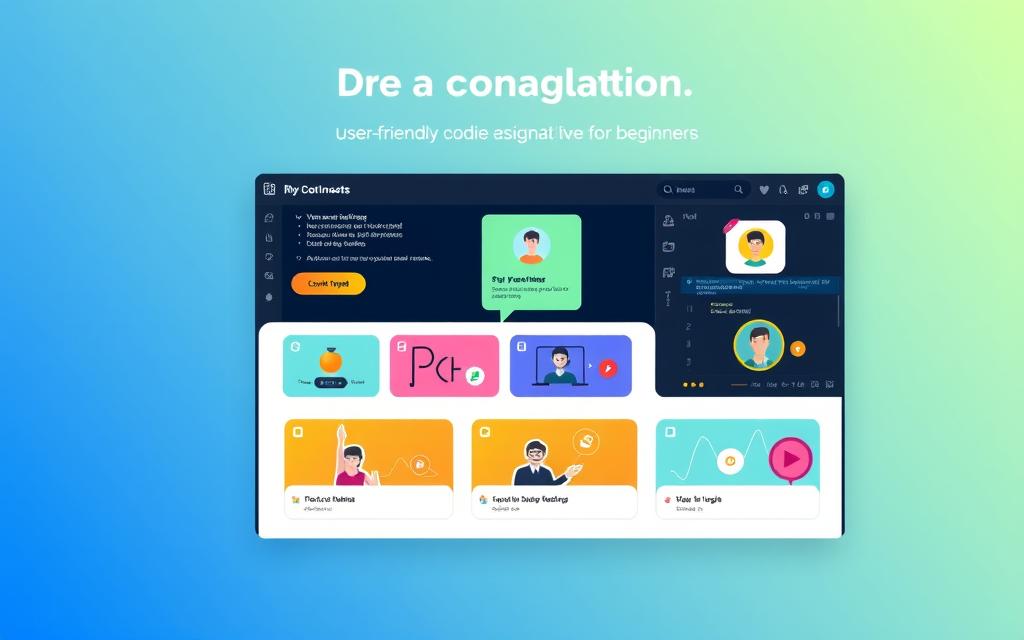
Learning to code can be a daunting task, but with the right mindset, it can be a piece of cake for beginners. The phrase “piece of cake” originated from RAF pilots who used it to describe straightforward missions. Similarly, coding can be approached with confidence and expectation of success.
The coding landscape has evolved significantly, becoming more accessible with user-friendly platforms and resources designed for newcomers. This article will explore how coding has become increasingly accessible and the reasons beginners often find unexpected success in programming.
By framing the coding journey as a story of progressive achievement, we can set positive expectations for readers. This story is one of overcoming common fears and misconceptions, and embracing the simplicity of coding.
The world of coding is often shrouded in mystery, but it’s time to demystify what coding actually entails. Coding, or computer programming, is the process of designing, writing, testing, and maintaining the source code of computer programs. This process involves a range of skills and tools that have evolved significantly over time.
Coding involves translating a problem or task into a language that a computer can understand. It’s about breaking down complex tasks into simpler, manageable instructions. This process requires logical thinking and problem-solving skills rather than just knowledge of programming languages. For instance, a programmer might need to develop an algorithm to sort data efficiently or create a user interface that is intuitive for users.
Skill
Description
Importance
Problem-Solving
Breaking down complex problems into simpler tasks
High
Logical Thinking
Understanding cause and effect in programming logic
High
Attention to Detail
Ensuring accuracy in code to prevent bugs
High
Common Misconceptions About Programming
Many people believe that programming requires advanced math skills or being a “computer genius.” However, while some mathematical concepts are useful, they are not a barrier to entry. Programming is more about understanding how to approach problems in a methodical way. The phrase “a piece of cake” originated from the RAF pilots’ slang, where it meant something was easy. Similarly, coding can be seen as a piece of cake when broken down into simpler tasks.
The Evolution of Coding Languages and Tools
Coding languages and tools have evolved significantly, becoming more intuitive and user-friendly. Modern programming environments provide immediate visual feedback, making the learning process more engaging. For example, visual development environments like Scratch or Blockly allow beginners to learn programming concepts through interactive, block-based coding. This evolution has made coding more accessible, much like how the term “piece cake” became mainstream, simplifying complex ideas into understandable language.
In conclusion, coding is not just about writing complex code; it’s about solving problems and creating solutions. With the right mindset and resources, anyone can learn to code. It’s a skill that, like any other, requires practice and patience. The notion that it’s a difficult task is a misconception; with the right approach, coding can be a piece of cake.
Why Learning to Code Can Be a Piece of Cake
The phrase “a piece of cake” was originally used by RAF pilots during WWII to describe straightforward missions, a concept that can now be applied to learning to code. Just as pilots found certain tasks easy, many people are discovering that coding can be a similarly accessible skill.
The Origin of the Phrase “A Piece of Cake”
The idiom “a piece of cake” has its roots in British RAF slang during World War II. It first appeared in print in a 1942 Life magazine article written by an RAF pilot: “It sounds incredible considering that we were 150 miles from the target but the fires were so great that it was a piece of cake to find the target area.” By 1943, it had become so well-known that Cyril Henry Ward-Jackson titled his book “It’s a Piece of Cake: or R.A.F. Slang Made Easy.” The phrase eventually transitioned into American English, becoming a common expression to describe an easy task.
This historical context is fascinating because it parallels the journey of coding. Just as the phrase evolved from a specialized slang to a widely understood idiom, coding has transitioned from a highly specialized skill to something that many people can learn.
Modern Resources That Make Coding Accessible
Today, coding is more accessible than ever, thanks to a wealth of modern resources. Online platforms, interactive coding environments, and supportive communities have transformed the learning process. Unlike the dense technical manuals of the past, modern coding education often involves gamified learning experiences that make the process enjoyable.
Coding platforms now offer immediate feedback and validation, allowing beginners to see results from their first day of learning. This instant gratification is a significant departure from the traditional learning methods, making coding feel more like a piece of cake.
The Building Block Approach to Learning Code
Modern coding education employs a building block approach, breaking complex concepts into manageable pieces that build upon each other. This natural learning progression helps learners understand and retain information more effectively. As a result, what might have seemed daunting becomes a series of achievable steps, much like following a recipe to bake a cake.
In conclusion, learning to code can indeed be a piece of cake when approached with the right resources and mindset. Just as RAF pilots once described easy missions, many beginners are finding that coding is within their grasp.
5 Reasons Beginners Find Success in Coding
The world of coding is no longer daunting for newcomers, as modern resources and approaches make it surprisingly manageable. Several key factors have transformed the learning process, making coding accessible to beginners. In this section, we’ll explore the five main reasons behind this shift.
Intuitive Learning Platforms
Modern coding education has been revolutionized by intuitive learning platforms that use visual interfaces and plain language to simplify complex concepts. Platforms like Codecademy and FreeCodeCamp have made coding a piece of cake for many beginners.
Online forums, social coding platforms, and mentorship opportunities have created safety nets that prevent beginners from getting stuck or giving up. Communities like GitHub and Stack Overflow provide valuable resources and support, making the learning process less isolating and more engaging.
Practical Project-Based Learning
Project-based learning transforms abstract coding concepts into tangible creations, giving beginners immediate purpose and satisfaction. This approach avoids the “death by theory” method of traditional education, allowing learners to see the practical application of their new skills.
Immediate Visual Feedback
Modern coding environments provide instant results, allowing beginners to see the direct consequences of their code and learn through experimentation. This immediate visual feedback loop accelerates the learning process and keeps beginners motivated.
Transferable Problem-Solving Skills
Coding naturally builds transferable problem-solving skills that enhance other areas of life and work, creating a positive feedback loop of success. As beginners develop these skills, they become more confident in their ability to tackle challenges, both within and outside the realm of coding.
By combining these five factors, the process of learning to code becomes a piece cake for motivated beginners, regardless of their technical background. This comprehensive approach not only simplifies coding but also opens up new opportunities for learners to explore their creativity and potential.
Conclusion: Your Coding Journey Starts Today
Embracing the journey of learning to code can be a liberating experience, and it’s easier than ever to get started. As we’ve explored throughout this article, coding has transformed from an intimidating technical skill to an accessible creative outlet that can truly be “a piece of cake” for beginners.
The journey of learning to code is about progressive adaptation and growth, much like the evolution of the phrase from RAF pilot slang to common usage. It’s not about overnight mastery but about taking small steps every day. While learning to code won’t always be effortless, the modern landscape has removed many traditional barriers, making it more accessible than ever.
To begin your coding journey today, consider using beginner-friendly platforms and resources that embody the principles discussed in this article. Focus on building your skills in small, manageable chunks, and don’t be afraid to make mistakes – they’re an essential part of the learning story of every successful programmer.
The story of every successful developer begins with simple first steps. By embracing the building-block approach and focusing on small daily achievements, you can make coding truly “a piece of cake” in your own life. Avoiding the “death” of motivation is key to success, and the supportive resources outlined in this article provide the framework needed to maintain momentum through challenging days.
Take your first steps into coding with confidence, knowing that many successful developers once stood exactly where you are now. With persistence and the right resources, you can transform your life and career prospects, opening doors to new opportunities in an increasingly digital world.
FAQ
What is the best way to start learning to code?
The best way to start learning to code is by using intuitive learning platforms that provide a building block approach to learning. This allows beginners to grasp the basics before moving on to more complex topics.
How long does it take to become proficient in coding?
The time it takes to become proficient in coding varies depending on the individual and the amount of time devoted to learning. With consistent practice and dedication, one can start seeing progress in a matter of days or weeks.
What resources are available for beginners who want to learn to code?
There are many modern resources available that make coding accessible to beginners, including online tutorials, coding communities, and practical project-based learning opportunities.
Is coding a difficult skill to learn?
Coding can be a challenging skill to learn, but with the right resources and support, it can be a story of success for many beginners. By breaking down complex topics into smaller, manageable chunks, anyone can learn to code.
Can I learn to code by reading a book?
While reading a book can be a good starting point, it’s often more effective to learn by doing. Many online resources provide hands-on experience and immediate visual feedback, which can be invaluable in the learning process.
What kind of support is available for beginner coders?
Beginner coders can tap into supportive online communities where they can ask questions, share their experiences, and get feedback from more experienced coders.
How does coding relate to real-life events?
Coding is used in many real-life applications, from piloting aircraft to managing complex systems. By learning to code, individuals can develop transferable problem-solving skills that can be applied to a wide range of situations.
Can I see the impact of my coding skills in real-life?
Yes, as you progress in your coding journey, you can create projects that have a tangible impact. Seeing the picture of your code come to life can be a rewarding experience.
What happens if I encounter an error in my code?
Encountering errors is a normal part of the coding process. By using the right tools and resources, you can learn to debug your code and move forward with your project, using each event as a learning opportunity.
Is it possible to make a career out of coding?
Yes, coding can be a fulfilling career. With dedication and persistence, individuals can develop a successful career in coding, and share their account of success with others through various media, including writing an article or creating an edition of their work.